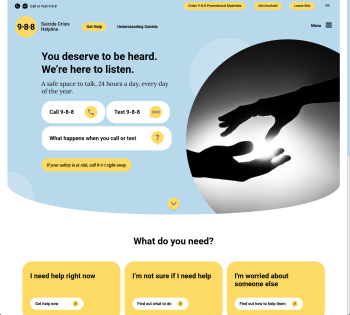

988 Suicide Crisis Helpline
9-8-8: Suicide Crisis Helpline is Canada’s three-digit, toll-free number for anyone experiencing suicidal thoughts or serious emotional distress. The service launched nationally on November 30 2023, under the coordination of the Centre for Addiction and Mental Health (CAMH) in partnership with provincial/territorial crisis lines.
It operates 24 hours a day, every day of the year, and supports both phone calls and text messages.
The core purpose is to provide immediate, compassionate listening and connect people with safety-planning and further supports, no matter where they are in Canada.
What you can expect
When you call or text 9-8-8 you will be connected to a trained responder who listens without judgement, works to de-escalate the situation, helps you explore ways to keep safe, and can connect you to local community resources if needed. If required, emergency services may be involved—but only when your safety is assessed to be at imminent risk.
Support is available in English and French by default; if you prefer another language, interpreters may be accessed. For Deaf/hard-of-hearing individuals, video relay services (ASL/LSQ) and TTY/IP relay are options.
There is no cost to contact the line. If you’re unsure whether to call, texting is a valid pathway. The goal is that no one is turned away.
Who it serves
The service is available to any person in Canada who is experiencing a suicidal crisis or worried about someone else. It is trauma-informed, culturally aware (including partnerships with Indigenous-serving services such as Hope for Wellness Help Line), and designed to reach people in rural, remote, urban and northern communities alike.
While the primary mandate is suicide prevention, the line also helps with emotional distress generally—so callers/texters don’t need to identify purely suicidal intent to reach out.
Why it matters
Suicide remains a significant public-health challenge in Canada. By providing a number that is easy to remember (9-8-8), working through a national network of nearly 40 local/provincial/territorial crisis-lines, and offering both voice and text support 24/7, the service lowers barriers to seeking help.
Early data show robust usage: for example, one monthly data release reported an answer-rate of ~85 % across 37 partners, with average wait times around 1 minute 45 seconds for voice, and ~2 minutes 12 seconds for text.
This kind of timeliness and accessibility is crucial when people are in acute distress and may not otherwise know where to turn.
Practical notes
If you or someone else is in immediate danger, call 9-1-1 rather than waiting.
Even if you’re unsure whether your situation qualifies, calling or texting 9-8-8 is encouraged: the responder can help you decide what to do next.
Keep the number (9-8-8) saved in your phone and share it with friends, family, or colleagues—knowing the number can itself be a protective factor.
While the line is national, actual responding may happen via a regional partner depending on your location.
The service is not a substitute for ongoing therapy or case management—once immediate crisis support is provided, you may be directed to longer-term local resources.
Limitations
Because the service is nationwide and relies on regional partners, local wait times or referral options may vary. The line handles crisis intervention, not long-term counselling, so if you need sustained therapeutic support you will need to connect with a local service afterwards.
Also, while the line accommodates many languages via interpretation, it cannot guarantee every conceivable language directly without request.
Finally, the service is voluntary; responders will do their best but cannot guarantee outcomes; reaching out early is better than waiting.
Summary
In short: if you are in Canada and experiencing suicidal thoughts or severe emotional distress—or you are worried about someone else—calling or texting 9-8-8 gives you access to a well-coordinated, nationwide, free crisis response service. It’s an important tool in the mental-health and suicide prevention ecosystem, particularly for those moments when you need someone to listen, to believe, and to connect you with support when it matters most.